Hafni author Helle Helle: Translators make the literary world go round
Helle Helle, one of Denmark’s most acclaimed authors, talks about the hidden layers of language, experimentation and the translators’ ear.
Text: Helle Helle, as told to Karoline Markholst and translated by Hazel Evans
Helle Helle on language that pops up
“Every time I write a novel, I’m surprised by how much language I contain. In my everyday life, I often have trouble finding the words to explain myself. For example, I can read an article in a newspaper and then struggle to tell my husband what it was about. I also find it difficult to describe to others what a particular person is like. Or I can sit with a crossword and fail to come up with a single synonym for ‘task’. But when I start writing, words and phrases appear that I haven’t thought of in years – sometimes ones I’ve never even used before. It could be a word like ‘bemeldte’ (roughly: ‘said’ or ’aforementioned’). I don’t think I’ve ever used that word before, but here it came to me effortlessly.”
Helle Helle on experimenting
“For the past seven years, I’ve been writing novels that take place in the same universe. It began with the novel “they”, about a sixteen-year-old daughter and her mother who becomes terminally ill. Those two are the ‘they’ in the book. But ‘they’ are also all the people the daughter gets to know at secondary school in 1981, where the novel is set.
When it was published, I thought for a while that I was finished as a writer. I felt I had exhausted all my raw material. But then it struck me that perhaps it could serve as the basis for all my future novels.
For me it’s essential that every novel contains an experiment. That the form – the language, the grammar, the perspective – becomes part of the content itself. That the way something is written helps to tell the story. For example, “they” is written in the radical present tense. Everything, except for certain lines of dialogue, is in the present tense – even when it takes place yesterday or last year. Sometimes this creates impossible, perhaps even painful, sentences. The daughter will lose her mother, the mother will become past tense, but the novel won’t allow it, won’t allow anything but the present tense.”
Helle Helle on the work of translators
“I don’t really understand how it’s possible to translate – that you can move one language into another. Because it’s not just a matter of replacing words; it’s meaning, meaning, meaning. Is ‘nå’ the same as ‘well’? How do you translate ‘globryllup’ (meaning: ‘a wedding attended just to watch, having received no invite’)?
I don’t think we talk enough about translations. Translators make the literary world go round. And they do so with such insight, sensitivity and care. They rewrite the books they translate, and while some things may get lost, other things emerge.
I work closely with many of my translators. They send me questions, which I answer as best I can, and it’s one of the most rewarding parts of my work. Several of the translators know each other, and their questions and my answers circulate among us. It’s a huge task for them – and partly my fault, because I’m probably quite demanding and because I work so much with subtle meanings and linguistic nuance.”
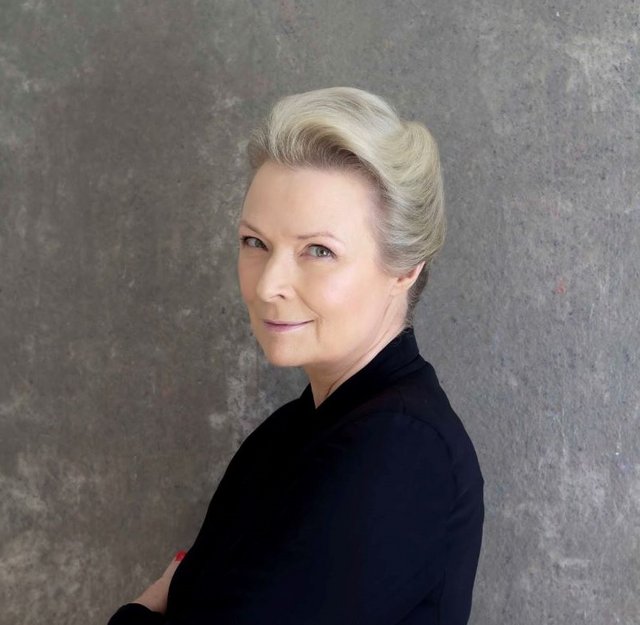
ABOUT THE AUTHOR:
Helle Helle (1965) is a graduate of the Danish Academy of Creative Writing and has been publishing books for over three decades.
Her breakthrough came with the novel RØDBY-PUTTGARDEN in 2005, for which she received the Critics’ Prize. Since then, she has received some of Denmark's highest literary honours, including the Per Olov Enquist Prize, the Golden Laurels, the Grand Prize of the Danish Academy and the Holberg Medal. She has also been nominated for the Nordic Council Literature Prize four times, and her books have been translated into 24 languages.
Helle Helle is represented by Winje Agency